The Journal/Investing Strategy
Boston's Famous Triple Deckers

November 4, 2026
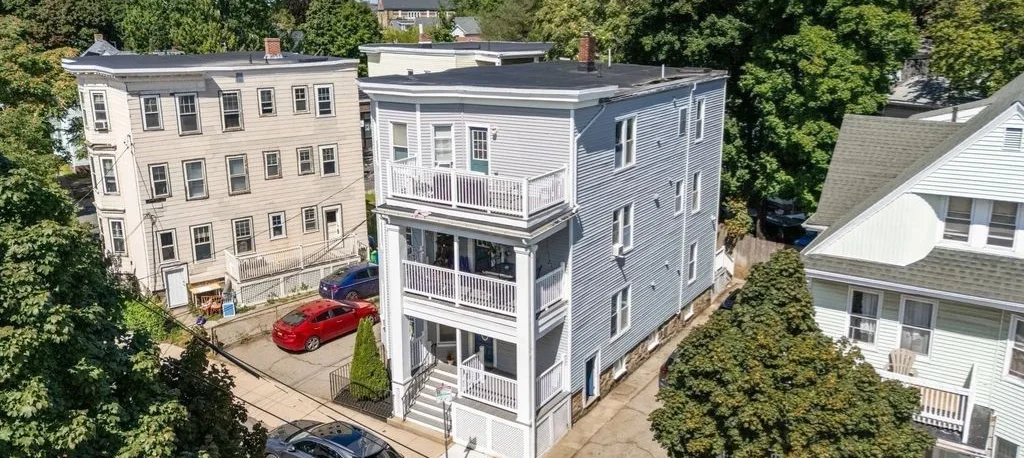
Drive through Dorchester, Somerville or Worcester and you'll see plenty of tall, narrow wooden houses with three stacked porches facing the street. They're triple-deckers (locals also call them three-deckers), and they're as much a part of Boston as the Red Sox and the gas lamps of Beacon Hill.
What is a triple-decker?
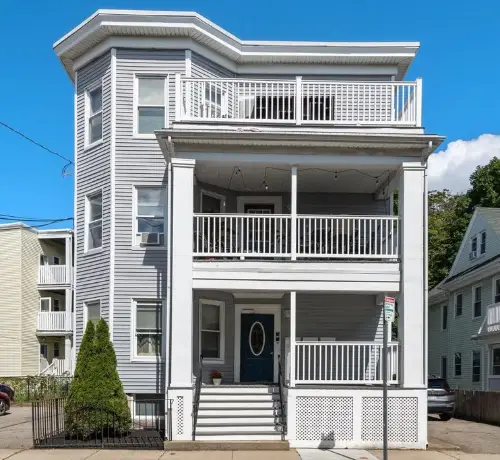
A triple-decker is a free-standing, wood-frame building with three apartments stacked one on top of the other, one per floor. Each unit runs the full length of the building so that every apartment gets windows on all four sides and no shared walls. The kitchens and bathrooms sit directly above one another so that builders could run a single stack of plumbing and wiring up through the house. That efficient design is a big part of why they built the hell out of these for many years.
Most triple-deckers went up between around 1880 to about 1930. That's when New England's factories and mills were growing fast and need lots of immigrant workers who needed affordable places to live. In Boston, they spread along the new streetcar lines into Dorchester, Roxbury, Mattapan and South Boston. Historians estimate roughly 15,000 were built in Greater Boston alone, and then tens of thousands more in mill towns like Worcester, Lowell, Lawrence and Fall River.
For many families, the triple-decker was the first step into homeownership. A family could buy the building, live on one floor, and rent the other two to help cover the mortgage. Just as often, the upper floors went to relatives, so grandparents, parents and grown kids could all live under one roof.
But the boom didn't last. In 1912, Massachusetts passed a law letting cities and towns ban wooden buildings with kitchens above the second floor. Supporters cited fire risk as these wooden structures would go up in flames quickly. But the law was also supported by an anti-immigrant group because many working-class immigrant families were concentrated in triple-deckers. By the 1920s, 36 Massachusetts communities had banned new triple-deckers, and by the 1930s construction had nearly stopped.
What makes them so Boston
Other cities have small multi-family buildings. Chicago has its brick 2-flats, and Philadelphia and Baltimore have rowhouses. But the free-standing wooden triple-decker, with its stacked porches, is a New England original. Roughly 10,000 still stand around the city today.
The earliest ones (1880s and 1890s) are Queen Anne style, with decorative shingles and sometimes mansard roofs. Later ones from the 1900s through the 1920s are plainer Colonial Revival buildings. Some builders paired two triple-deckers side by side into a six-unit building nicknamed a "perfect six."
Why investors still love them
More than a century later Boston house-hackers have discovered that the triple-decker's original business model still works. They live on one floor, rent the other two, and let their tenants help pay the mortgage. Because a triple-decker has three units, it qualifies for residential financing, including FHA loans for buyers who live in one of the units. That makes it one of the most accessible ways to start investing in a city where about 64% of households rent. Keep in mind though that since they were built long before 1978 you'll need to comply with Massachusetts' lead paint law if young children will live there. Older wiring, plumbing and porches often need updating as well. But for many investors they're worth the effort.