The Journal/Investing Strategy
Buying a Multi-Family Home with an FHA Loan
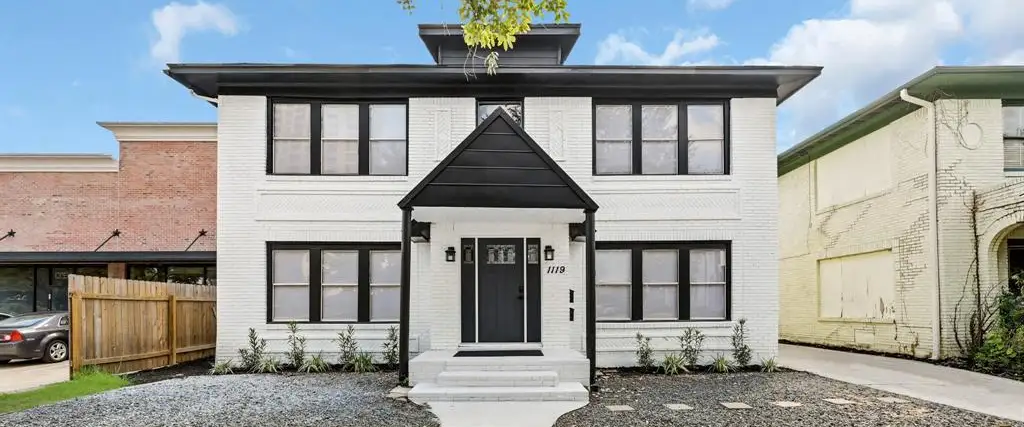
FHA loans are a very useful tool in the house hacker's toolbox, and it's the way many people get their start in small residential investments. An FHA loan lets you buy a multi-family building with up to four units for the same 3.5% down payment you'd put down on a single-family home. It's not all cake and sunshine though, as there are some rules, fees and inspections that have to be addressed with any FHA loan, whether it's for multi-family or single-family homes.
What Counts as "Multi-Family" for FHA?
FHA's single-family program covers properties with one to four units. Once a building has five or more units (which would include a fourplex with a permitted ADU), it moves into commercial lending and FHA loans are no longer an option. Mixed-use buildings, like a live-work loft or a storefront with an apartment upstairs can qualify too as long as the square footage is at least 51% residential.
FHA Loan Requirements
The great thing about qualifying for an FHA loan is that the qualifying rules are the same whether you're buying one unit or four.
Credit score and down payment. To be able to put down only 3.5% you're going to need a credit score of 580 or higher. That's pretty generous, and honestly if your credit score is less than 580 you'd probably be better served getting than number higher before becoming a landlord. Keep in mind that if the heat goes out or there's a plumbing issue in a tenant's unit you're going to have to get that fixed ASAP. If you don't have access to credit that could make it tough. You can't tell a tenant you'll get it fixed on your next payday. However if you do have a credit score of less than 580 and you want to buy a multi-family property you can still get an FHA loan. But you'll likely have to put at least 10% down to compensate for the increased risk.
Debt-to-income ratio. FHA's baseline is 31% of your income going to service the loan, and 43% going towards your total monthly debts. There might be some flexibility that if you have significant assets or cash reserves.
Owner occupancy. This is probably the biggest requirement, and there's no wiggle room here. At least one borrower on the loan must move into one of the units within 60 days of closing, and they have to sign an affidavit stating they intend to live there as a primary residence for at least one year. After that first year, you're free to move out and rent your unit too, and the FHA loan stays in place.
One FHA loan at a time. You can't stack up these FHA loans on multiple properties to build a rental portfolio. Alas, you can only have one FHA-insured mortgage at a time.
No short-term rentals. When you close on your property you're going to have to sign form HUD-92561 swearing not to rent any part of the property for less than 30 days while FHA insures the loan. So no AirBNB's while you have the loan.
The property itself. The building has to appraise for at least the loan amount and meet FHA's minimum property standards for safety, soundness and security. And that applies to every unit - not just the one you plan to occupy. This is where an inspection comes in, and the seller may have to make some updates or repairs in order for FHA to write the loan.
2026 FHA Loan Limits for Multi-Family Homes
Here's where FHA changes a bit for a multi-family loans vs single-family, and thankfully it's in the house hackers's favor: The loan limit rises with the number of units. The limit is set county-by-county based on the median home price. And keep in mind these numbers are for the amount of the loan, not the price of the property.
|
Units |
Maximum Loan in Low-cost Areas |
Maximum Loan in High-cost Areas |
|---|---|---|
|
1 unit |
$541,287 |
$1,249,125 |
|
2 units |
$693,050 |
$1,599,375 |
|
3 units |
$837,700 |
$1,933,200 |
|
4 units |
$1,041,125 |
$2,402,625 |
More Good News: The Rental Income Helps You Qualify
On a 2-4 unit purchase, the rent from the units you won't live in count as income towards your loan qualification. The lenders will apply 75% of the appraiser's estimate of market rent or the existing leases. It's not 100% because they assume you'll need some to cover vacancies and repairs.
So if you're going to house hack a duplex and one side has a tenant paying $1,600 a month, you just added about $14,400 to your annual income to qualify for the loan. If it's a fourplex you may have just added ~$43,000 to your income!
The Self-Sufficiency Test for Triplexes and Fourplexes
If you want to use FHA to buy a 3- or 4-unit property, they're going to want proof that the building can pay for itself. Remember, everything the lender does is to increase their chances of getting paid no matter what happens. So they have a self-sufficiency test where an appraiser calculates market rents for ALL the units, including the one you'll live in, and counts 75% of it. That figure must be equal to or greater than the property's full monthly payment including principal, interest, taxes, insurance, mortgage insurance and any HOA dues. Your income has no impact on this score, which means even if you're well qualified and have great income you can be denied the loan if it fails this test.
Reserves. 3- and 4-unit buyers also need at least three months of full mortgage payments (PITI) in the bank after closing.
FHA Mortgage Insurance Rains on the Parade
It's not all good news. FHA loans carry an insurance policy called MIP (Mortgage Insurance Premium) that you pay for to protect the FHA. That's right - They make you take out and pay for an insurance policy that protects them in case you default on the loan. It's not cheap but it's not really a deal killer either for most buyers. There are two payments you'll have to make for your MIP.
1. Upfront MIP. A one-time premium of 1.75% of the base loan amount. Most borrowers roll it into the loan rather than paying cash at closing.
2. Annual MIP. A yearly premium divided into 12 monthly charges and included in your mortgage statement. For a 30-year loan, the rate depends on your loan size and the down payment. Here's a breakdown:
|
Base loan amount |
Down payment |
Annual MIP |
How long you pay it |
|---|---|---|---|
|
$726,200 or less |
Less than 5% |
0.55% |
Life of the loan |
|
$726,200 or less |
5% to under 10% |
0.50% |
Life of the loan |
|
$726,200 or less |
10% or more |
0.50% |
11 years |
|
Over $726,200 |
Less than 5% |
0.75% |
Life of the loan |
|
Over $726,200 |
5% to under 10% |
0.70% |
Life of the loan |
|
Over $726,200 |
10% or more |
0.70% |
11 years |
Is MIP a life sentence? Thankfully no, but you'll have to put more down up front. If your down payment is less than 10%, annual MIP lasts for the life of the loan. Unlike conventional loan PMI it does not fall off when you reach 20% equity in the property. Imagine that - even if you have 50%+ equity in your multi-family property you still have to pay for the insurance to protect the lender when there's really no risk of them losing money. If you put down 10% or more, it drops off automatically after 11 years.
How Conventional PMI Is Different
After reading about that MIP premium you might be questioning whether or not you should even use FHA. Conventional loans use PMI (Private Mortgage Insurance) which is basically the same thing. However on conventional loans you can ask your lender to cancel the PMI once your balance reaches 80% of the home's original value, and it should end automatically at 78%. So if you're well qualified and you want to put 10% down on an FHA loan to get the 11 year expiration of MIP, you might consider putting that same 10% down on a conventional loan. Just food for thought.
Refinancing Out of an FHA Mortgage
Since low-down-payment FHA loans keep MIP forever, the usual exit is to refinance into a conventional loan once you have about 20% equity. At an 80% loan-to-value ratio or lower, the new conventional loan needs no mortgage insurance at all.
A few things to keep in mind:
-
Equity can come from two places. You can build equity by slowly paying down principal and by appreciation. Appreciation is usually faster, and a conventional refinance will use a new appraisal of the property's current value, not what you paid. In a rising market, you could hit 20% equity within a few years.
-
There's no FHA waiting period. You can choose to refinance into a conventional loan at any time that you feel it's financially beneficial to do so.
-
Expect full underwriting. Unlike an FHA Streamline, a conventional refinance means a new appraisal, income and asset documentation, and credit qualification. 620 is a common minimum credit score for a conventional loan. Of course the higher the better.
-
The numbers have to make sense. Taking out a new loan comes with a lot of up front costs, and it may take years of saving MIP premiums to break even. That's especially true in our current market of increasing interest rates. So take the time to sketch out if saving $300 a month of MIP is worth another round of closing costs and a higher interest rate. Plenty of owners with low-rate FHA loans have found these days that keeping the MIP is cheaper than refinancing.
-
Multi-family refinances can be stricter. Some lenders cap loan-to-value ratios lower on multi-family homes than on single-family homes, sometimes as low as 70%. Also appraisals for income properties take longer and cost more.
FHA on a Multi-Family vs. a Single-Family Home
Here's a handy grid to review how the FHA rules change depending on the number of units:
|
|
Single-family home |
Duplex (2 units) |
Triplex / Fourplex (3–4 units) |
|---|---|---|---|
|
Minimum down payment (580+ score) |
3.5% |
3.5% |
3.5% |
|
2026 loan limit range |
$541,287–$1,249,125 |
$693,050–$1,599,375 |
$837,700–$2,402,625 |
|
Rental income counts toward qualifying |
Only from an eligible ADU |
Yes, typically 75% of market rent |
Yes, typically 75% of market rent |
|
Self-sufficiency test |
No |
No |
Yes |
|
Required cash reserves |
Set by underwriting |
Set by underwriting |
3 months of PITI |
|
MIP rates and removal rules |
Standard |
Same |
Same (larger loans may hit the higher tier) |
|
Owner occupancy |
60 days, 1 year |
60 days, 1 year |
60 days, 1 year |
|
Short-term rentals allowed |
n/a |
No (30-day minimum) |
No (30-day minimum) |
A few general items to remember about FHA loans on multi-family homes:
-
Every unit has to pass inspection. Peeling paint, missing handrails or a broken heater in a tenant's unit can hold up closing just like one in yours. Older buildings with deferred maintenance may need repairs before closing, which can be contentious with the seller. If the seller isn't willing to make the repairs you could consider an FHA 203(k) renovation loan.
-
Existing tenants come with the building. As the new owner you inherit leases, deposits and tenant relationships. You can't just kick everyone out once you take possession. If the tenants are month-to-month you can ask the seller to give them notice to vacate and deliver the property vacant. Either way be sure to ask for estoppel letters and copies of every lease during escrow.
-
You become a landlord on day one. Budget for vacancies, repairs and your own time. Living next door to your tenants has real advantages, and some real awkward moments. Keep in mind that just because you have to live in one of the units, the other tenants don't need to know that you own the building. You can always hire a management company to handle everything for you.
Are there any other alternatives to FHA?
Yes! In November 2023 Fannie Mae started allowing 5% down on owner-occupied 2-4 unit homes with a conventional loan, down from the old 20% to 30%. The conventional route has some benefits we discussed like no self-sufficiency test, no required repairs and the PMI can be canceled once you reach 20% equity. There are tradeoffs, like needing stronger credit and more reserves to qualify for a conventional loan.
Here's a rough rule of thumb:
-
FHA tends to win when your credit score is below the high 600s, your down payment is limited to 3.5%, or you're buying a duplex where the self-sufficiency test doesn't apply.
-
Conventional 5% down tends to win when you have good credit, the triplex or fourplex you want fails FHA's self-sufficiency test or isn't in good enough condition to pass the FHA inspection.
A good real estate broker who specializes in multi-family sales (like the ones here on Duplexes.com!) will know lenders who can run both scenarios for you on a property before you make an offer. They can also help you identify properties that fit your investment objectives.
Please note: This article is for general information only and isn't financial or lending advice. FHA guidelines, loan limits and mortgage insurance rates change periodically, and individual lenders may add stricter requirements. Confirm the details for your situation with a licensed mortgage professional.